Changing Lanes in Trauma Therapy
Introducing Brain-Based Therapies for Clients Who Hate Change
Four-Part Series with Kerry Klett, PsyD
Fridays, Oct. 30th - Nov. 20th, 12pm-1:30pm ET
$345 | 4 CEs Available
Register NowKey Information at a Glance
Join Dr. Kerry Klett for this 4-part webinar focused on introducing brain-based therapies into a trauma-focused practice. Through lectures, case presentations, and group discussion, participants will gain tools to navigate potential challenges around changing modalities, evolving client/therapist relationships, and even struggles that may arise from positive treatment outcomes.
Whether you are experienced in brain-based therapies or just beginning to integrate them into your practice, this webinar offers an opportunity to reflect on your clients' experiences, strengthen your therapeutic relationships, and successfully integrate powerful trauma-focused modalities into your practice.
Define Core Concepts: Through focused lectures, participants will explore key concepts, such as the treatment frame, transference, and resistance, and consider how they illuminate challenges with changing treatment modalities.
Explore Case Examples: Dr. Kerry Klett will present relevant case examples from her vast clinical experience. Cases will demonstrate the dynamics of changing focus in trauma treatment, as well as successful interactions that guide patients through new treatments for positive outcomes.
Enhance your Practice: The series will include interactive group discussions for participants to reflect on and share their own experiences utilizing brain-based modalities with trauma patients.
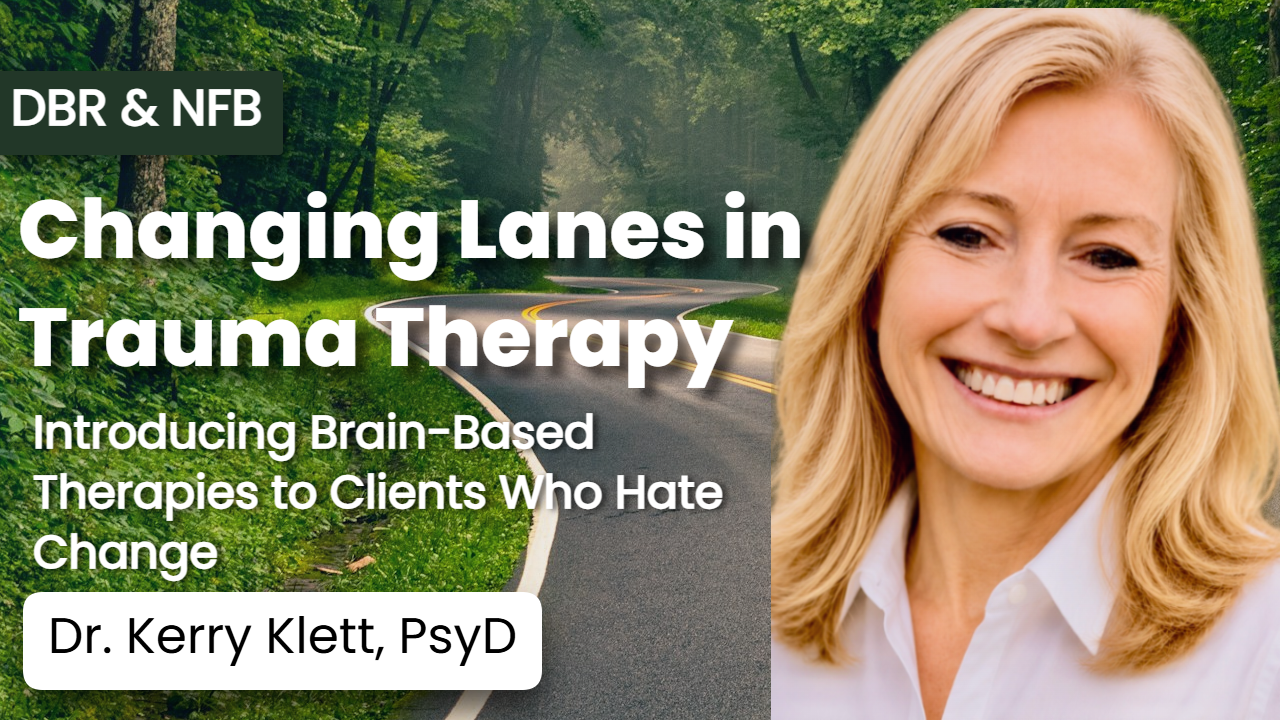
Changing Lanes in Trauma Therapy with Kerry Klett
Four-Part Webinar Series
Kerry Klett, Psy.D. leads this interactive webinar series focused on integrating brain-based therapies into an existing, trauma-focused psychotherapy practice.
$345 | 4 CEs Available
Participants Who Complete This Course Can Earn 4 Continuing Education (CE) Credit Hour Upon Completion

Define the treatment frame and how it helps anticipate challenges with changing treatments.

Explain transference and resistance and their relationship to changing the treatment frame.

Identify strategies to help patients through changes in treatment focus and the therapeutic relationship.
Course Schedule
Session 1 | Expectations and the Treatment Frame: This session will define the treatment frame and explore how the concept helps anticipate challenges associated with changing modalities.
Session 2 | Transference and Resistance: This session will define these key concepts and consider how they show up in trauma treatment and how they relate to changing the treatment frame.
Session 3 | When Your Client is Someone Else's Client: This session investigates potential challenges and strategies for working with clients that come from other therapists.
Session 4 | How will the client change as a result of the treatment: In the final session, the course will consider strategies for navigating positive and negative treatment outcomes.
Questions? Let us know!
A member of our team will reach out to assist.
From the Presenter
"Change of any kind, even the positive ones, can be fraught with challenges for our clients. Changing the frame of the treatment, which is what adding a new therapy method inherently entails, requires thoughtful planning and consideration of the needs of the client, especially the traumatized client. Adding trauma-focused treatments, such as neurofeedback or DBR to the established psychotherapy practice will require a major shift in the treatment frame, a “lane change,” so to speak.
In this class we’ll talk about the specifics of adding these powerful treatment tools to our established way of practicing psychotherapy. We’ll discuss how this shift in how we practice will inevitably change the relationship and how that might feel for both the therapist and client. If we’re prepared for these changes we can deal with them more effectively, with sensitivity and calm, rather than blindly making that lane change."

Kerry Klett, Psy.D.
Dr. Kerry Klett is a licensed clinical psychologist, practicing in the Princeton, NJ area for over 30 years. She sees adults and adolescents with a variety of symptoms and presentations, many having suffered from developmental trauma, PTSD and severe anxiety. She also enjoys offering supervision and therapy to other therapists, at all stages of their careers.
She received her PsyD from Rutgers University’s Graduate School of Applied and Professional Psychology (GSAPP) in 1992 and was licensed as a practicing psychologist in New Jersey in 1995. She completed post-doctoral training in psychodynamic psychotherapy and psychoanalysis at the Institute for Psychoanalysis and Psychodynamic Psychotherapy of NJ.